


Shaver-Kudell
EZE® Shaft Repair Sleeves: Durable and efficient shaft repair
EZE® Shaft Repair Sleeves: Durable and efficient shaft repair
SKU:WH 1000-2
Important Note Regarding Price Inquiry
Important Note Regarding Price Inquiry
Products with a price of 0.00 € are not free items.
By ordering these items, you are creating an individual quote request. Our sales team will then contact you personally with a quote or an order confirmation.
Couldn't load pickup availability
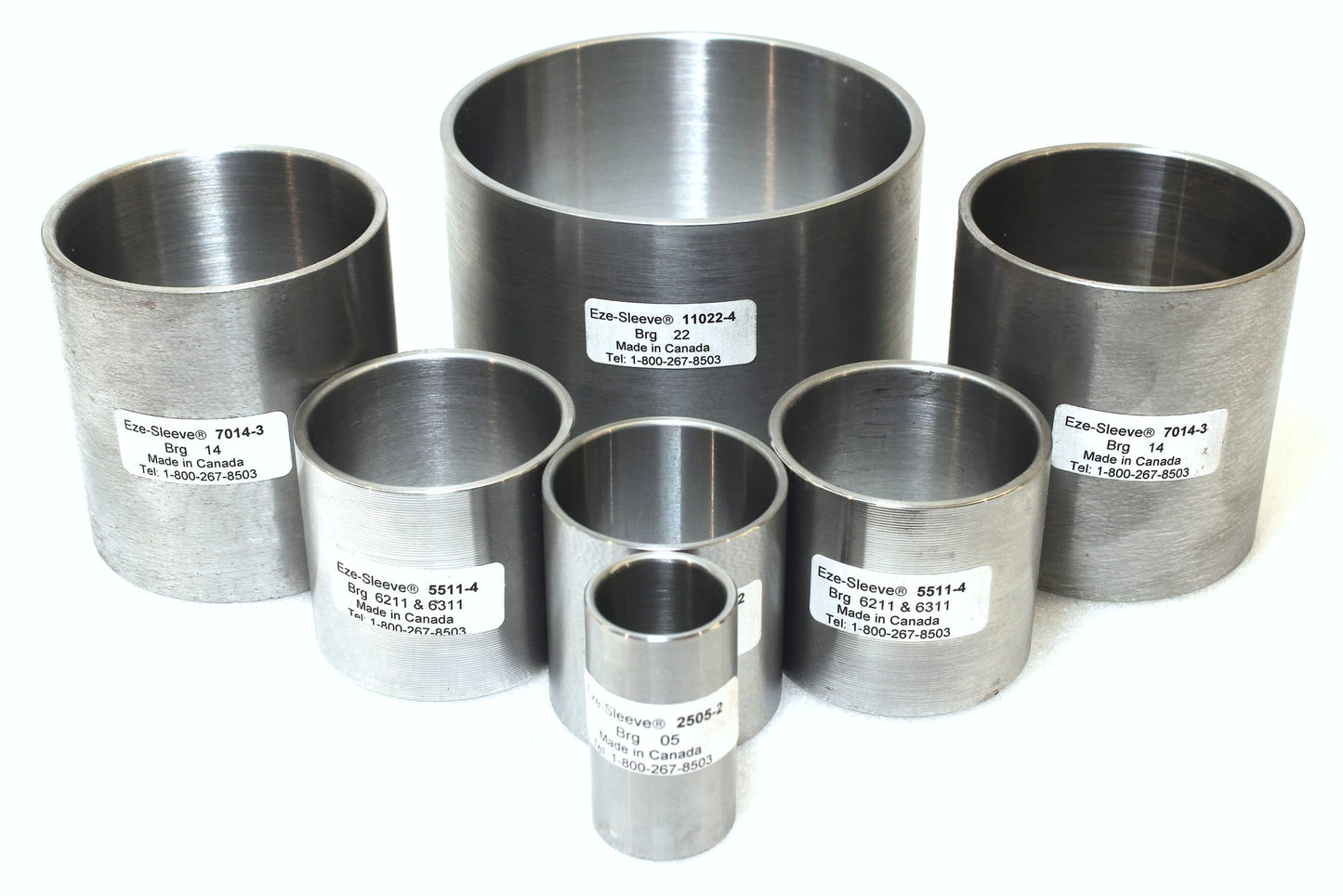
The EZE® Shaft Repair Sleeves offer repair shops and workshops a highly effective, economical, and environmentally friendly solution for restoring damaged shaft surfaces. Manufactured from high-quality C 22 steel (SAE 1020) and equipped with a fine-bored inner surface, they ensure break-proof and fail-safe performance. Through the thermal shrink-fitting process, your components are guaranteed to remain free of weld-induced stresses, distortion, and porosity – for a professional and permanent repair.
Your Benefits: Why EZE® is the superior solution for repairs
Choosing the right material is crucial for the quality of the fit and the efficiency of your workshop processes. Compared to improvised solutions (such as conventional mild steel tubing), EZE® Repair Sleeves offer decisive technical and economic advantages:
- Flawless Surface Quality & Perfect Fit: Unlike simple mild steel, which often leaves grooved, thread-like structures when machined, our material allows for a smooth and clean finish. This prevents microscopic peaks from flattening out under radial load, which would subsequently cause clearance in the bearing seat.
- Excellent Machinability (Time Savings): The optimized material quality can be turned extremely cleanly and efficiently. The time-consuming and tedious regrinding of inner surfaces to remove machining marks is reduced to a minimum.
- Reduced Tool Wear: The material is gentle on your cutting tools. You achieve long tool life without the mandatory use of expensive special carbide inserts, noticeably lowering ongoing workshop costs.
- Weld-Free Repair: The structural integrity of the original shaft is 100% preserved – without the risk of thermal microstructural changes.
- Sustainability & Resource Conservation: An environmentally friendly and economical alternative to the expensive, material-intensive new production of complete shafts.
Technical Specifications
| Specification | Value / Standard |
|---|---|
| Product | EZE® Shaft Repair Sleeves |
| Material | Steel C 22 (SAE 1020) |
| Inner Surface | Fine-bored for optimal fitting accuracy |
| Machining | Excellent machinability, gentle on tools |
| Safety Features | Break-proof and fail-safe under normal bearing loads |
| Environmental Properties | Resource-saving repair alternative |
Installation Guide: For a perfect shaft repair
- Preparation: Clamp the rotor in the lathe and align it precisely. Use a steady rest if necessary, bore out the shaft center hole, and then insert a live center.
- Take Measurements: Carefully document the exact dimensions of the bearing surface (diameter, length) and the sealing surface (if machining is required).
- Machine the Shaft: Turn the shaft down to a diameter exactly 0.05 mm larger than the inner diameter of the EZE® Repair Sleeve.
- Mount the Sleeve: Heat the EZE® Repair Sleeve evenly and shrink-fit it precisely onto the prepared shaft.
- Adapt the Sealing Surface: Machine the sleeve section over the sealing surface to the exact bearing dimension.
- Machine the Bearing Surface: Subsequently, bring the main bearing surface to the required fitting dimension.
- Finish the Sealing Surface: Turn the sealing surface back down to its original dimension.
- Machine the Edges: Carefully chamfer sharp edges to prevent subsequent damage during assembly.
- Finishing: Use fine emery cloth to bring the sleeve to the exact final dimension and polish it for optimal function of the bearing seat.
- Ready for Installation: After these steps, the professionally repaired shaft is immediately ready for installation.
Subject to technical changes and product modifications.
Trust in Seipp Quality
As an experienced industrial supplier for over 70 years, Seipp GmbH is your reliable B2B partner for certified quality in electrical machine and transformer construction. We guarantee the highest quality standards, durable products, and comprehensive technical service for your workshop.
Experience the efficiency of EZE® Shaft Repair Sleeves for yourself!
Download our German Manual or English Manual. There you will find all the important steps for working with the sleeve.
